A chipped front tooth has a way of taking over. You notice it in every photo, every mirror, every video call. The good news is that the fix is often far smaller than people expect. Dental bonding repairs chips, closes small gaps, and reshapes uneven edges in a single visit, usually without drilling and usually without numbing. It is one of the most conservative cosmetic treatments in dentistry, and for the right tooth it looks completely natural.
It is not right for every situation, though, and knowing where it stops being the best answer is just as useful as knowing what it can do. Here is a straight explanation of both.
In This Guide
- What dental bonding actually is
- What bonding fixes well
- Where bonding falls short
- Bonding, veneers, and crowns: how to choose
- What the visit is like
- Making bonding last
- Cost and paying for it
- Ready to look at your options
What Dental Bonding Actually Is
Bonding uses composite resin, a tooth-colored material with roughly the consistency of putty before it sets. Your dentist shapes it directly onto the tooth, sculpts it to match the surrounding enamel, then hardens it with a curing light. Once it sets, it is polished so it reflects light the way natural enamel does.
The word people miss in that description is directly. Nothing is manufactured in a lab and shipped back. The material goes on your tooth, gets shaped on your tooth, and you walk out with the finished result the same day. That single fact explains most of bonding's advantages and most of its limitations.
Because composite adheres to the tooth surface, simple repairs usually need little or no enamel removed. Our cosmetic dentistry for front teeth page goes into how we approach the teeth that show most when you smile, where matching the neighbors matters more than anywhere else in the mouth.
What Bonding Fixes Well
Bonding is at its best on small, contained problems in the front of the mouth, where the tooth is still fundamentally sound and the goal is appearance rather than structural rebuilding.
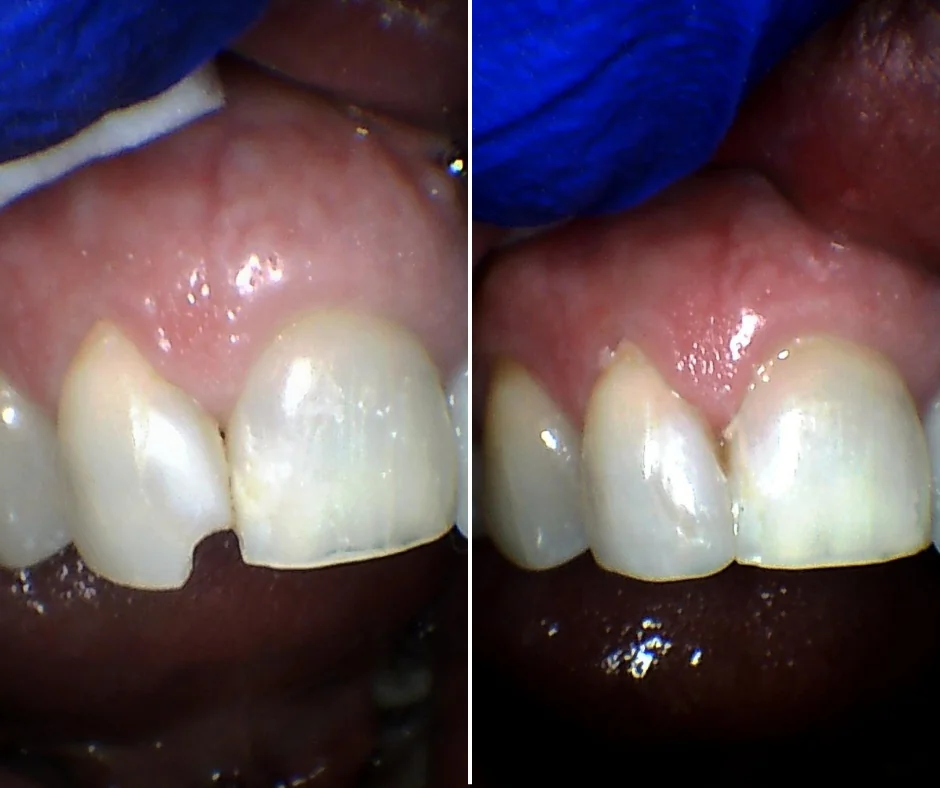
- Chips and rough edges. A corner broken off a front tooth is the classic case. The resin rebuilds the missing shape and is polished smooth.
- Small gaps between teeth. Adding a little width to the neighboring teeth can close a narrow space without moving anything.
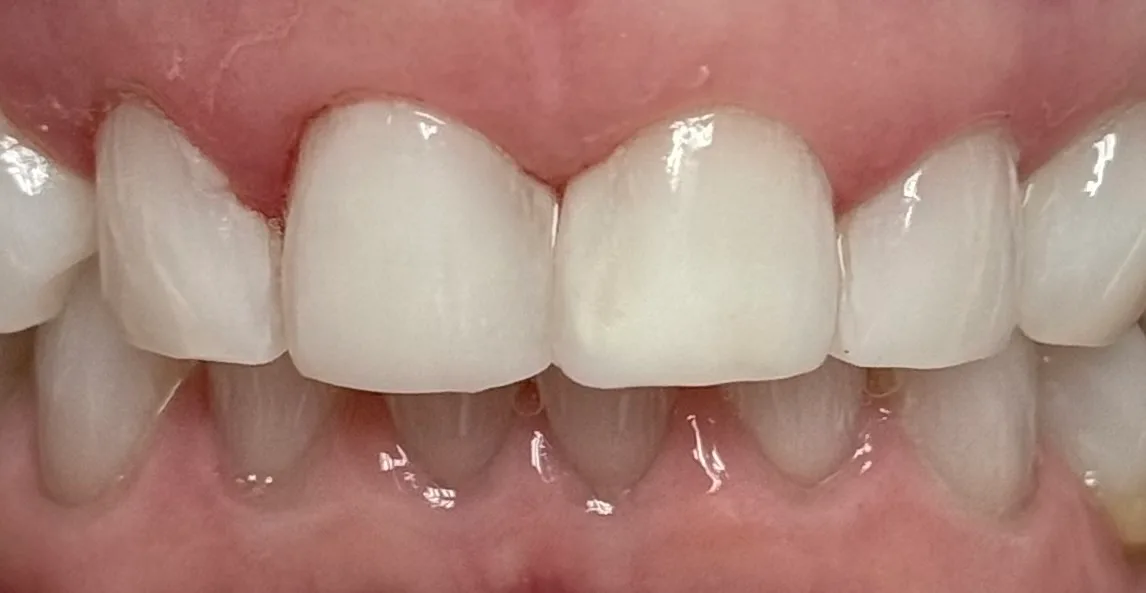
- Uneven or worn edges. Teeth that have flattened or shortened unevenly over the years can be brought back into line with each other.
- Small surface flaws. Isolated marks or discolored spots can be covered where whitening alone will not lift them.
- Slightly misshapen teeth. A tooth that is narrower or more pointed than its neighbor can be reshaped so the smile reads as even.
The common thread is that these are cosmetic problems on structurally healthy teeth. If that describes your situation, bonding is often the least invasive route to a noticeably better result. Our guide to front tooth repair options compares bonding against the alternatives case by case.
Where Bonding Falls Short
Composite is a good material, but it is not enamel and it is not porcelain. Being honest about the trade-offs is the difference between a patient who is happy in three years and one who is not.
- It stains over time. Composite picks up color from coffee, tea, red wine, and tobacco more readily than porcelain does. It also cannot be lightened later, which matters for the next point.
- Whitening does not work on it. Bleaching agents lift stains from natural enamel, not from resin. If you plan to whiten, whiten first and match the bonding to the finished shade afterward, or the repair will slowly stand out as the rest of your smile brightens.
- It chips. Composite is strong enough for normal use, but it is more prone to chipping than porcelain, particularly on biting edges.
- It is not a structural fix. A tooth with a large crack, extensive decay, or a failed old restoration needs coverage, not a cosmetic patch.
- It is not permanent. Expect bonding to need occasional polishing, repair, or eventual replacement, rather than treating it as a once-and-done procedure.
None of that disqualifies bonding. It just means the question is not only whether bonding can fix something, but whether it is the option you will still be pleased with years from now.
Bonding, Veneers, and Crowns: How to Choose
These three get compared constantly, usually without anyone explaining that they solve genuinely different problems.
Bonding
Direct composite, shaped in the mouth, finished in one visit. Conservative, typically removing little or no enamel. The most affordable of the three and the easiest to revise or repair later. Best for small chips, minor gaps, and edge reshaping.
Veneers
Thin custom shells, usually porcelain, made to cover the front of the tooth. They require some enamel preparation and more than one visit, and because the enamel does not grow back, the decision is a lasting one. In exchange, porcelain resists staining better and generally holds its appearance longer. Veneers make more sense when several front teeth need changing at once, or when the change you want is substantial. Our veneers page covers what that process involves.
Crowns
Full coverage over the whole tooth. A crown is a structural solution, not a cosmetic one. It is the right answer when a tooth is cracked, heavily filled, root-canal treated, or otherwise not strong enough to be trusted with a surface repair.
A useful way to think about it: bonding changes the surface, veneers reface the tooth, crowns rebuild it. If you are weighing a broader change across several teeth, the smile makeover cost guide lays out how a comprehensive case is usually phased.
What the Visit Is Like
For a straightforward chip, bonding is one of the gentler appointments in dentistry.
- We talk about the result you want. This is the part most worth your time. Bringing an old photo of your smile helps.
- We match the shade. Composite comes in many shades, and front teeth are rarely one flat color. Getting this right is the difference between invisible and obvious, which is why we treat color matching for front teeth as its own skill.
- The surface is lightly prepared. A mild conditioning gel is applied so the resin grips. For simple repairs this often needs no drilling and no anesthetic.
- The resin is placed and shaped. It is built up in thin layers and sculpted to match the contour of the tooth beside it.
- A curing light sets it. Each layer is hardened in seconds.
- We polish and check your bite. The finish is smoothed until it catches light like enamel, and we confirm the new edge does not interfere when you bite together.
Most single-tooth cases are done in one appointment. If you tend to find dental visits stressful, we offer nitrous oxide, and our anxious patients page explains the other things we do to make an appointment easier.
Making Bonding Last
How long bonding looks good depends more on daily habits than on the material itself.
- Go easy on staining drinks in the first couple of days, while the surface is settling.
- Do not use your front teeth as tools. Opening packaging, biting nails, and chewing pens are the fastest ways to chip a repair.
- If you grind your teeth, address it. Grinding will break bonding, and it will break the tooth underneath eventually too. A night guard protects both.
- Keep up your regular cleanings. Polishing at routine visits keeps surface stain from building into something permanent.
- Mention it at checkups. Small rough spots or edge wear are quick to smooth out when caught early.
Treated sensibly, a well-placed bond on a front tooth holds up well. Treated as indestructible, it will not.
Cost and Paying for It
Bonding is generally the most affordable of the cosmetic options, largely because there is no laboratory work and no second appointment. The exact figure depends on how many teeth are involved and how much rebuilding each one needs, so it is worth getting a specific estimate rather than a range from the internet.
Coverage varies. When bonding repairs a tooth damaged by decay or injury, dental insurance often contributes. When it is purely cosmetic, it usually does not. We accept most major PPO plans including Delta Dental, MetLife, Cigna, Guardian, and Aetna, and our insurance page explains how we handle benefits.
If you do not have coverage, there are two routes worth knowing about. Our in-house membership plan is $599 per person per year and includes two cleanings, two exams, annual X-rays, and 15% off other treatment. For larger cases we also offer financing through CareCredit and Sunbit so the cost can be spread out.
Ready to Look at Your Options
If a chipped or uneven front tooth has been bothering you, the first step is simply having someone look at it and tell you honestly whether bonding is the right tool for the job. Sometimes it is exactly right. Sometimes a veneer or a crown will serve you far better over the long run, and it is worth knowing that before you start.
You can see examples of finished work in our smile gallery. If the chip happened recently and the tooth is sore or sensitive, read our guidance on what to do after a chipped or knocked-out tooth first, since a painful tooth needs assessing before anything cosmetic.
To talk it through, call our Lodi office at (209) 369-3617 during our hours of Monday through Thursday, 8 AM to 5 PM, book online through The Dental App, or reach us through our contact page. We see families from Lodi, Stockton, Galt, and the surrounding communities, and we are happy to give you a straight answer about what your tooth actually needs.
Frequently Asked Questions
- Does dental bonding hurt?
- For a simple chip repair, usually not. Because little or no enamel needs to be removed, many bonding appointments are done without drilling and without anesthetic. If the area being treated is close to the nerve or decay needs removing first, we will numb it.
- Can you whiten dental bonding?
- No. Whitening agents lift stains from natural tooth enamel but do not change the color of composite resin. If you want a brighter smile overall, whiten first and have the bonding shade matched to the final result afterwards.
- How long does dental bonding last?
- It varies with the size of the repair, where it sits in your bite, and your habits. Bonding is expected to need occasional polishing, repair, or eventual replacement rather than lasting indefinitely. Avoiding nail biting, ice chewing, and using your teeth as tools makes the biggest difference.
- Is bonding cheaper than veneers?
- Generally yes, mainly because bonding is completed in a single visit with no laboratory work. Veneers cost more but resist staining better and typically hold their appearance longer, so the right comparison is cost over time rather than cost on the day.
- Will dental insurance pay for bonding?
- Often it contributes when bonding repairs a tooth damaged by decay or injury, and often it does not when the work is purely cosmetic. We accept most major PPO plans including Delta Dental, MetLife, Cigna, Guardian, and Aetna, and we will check your benefits before treatment.