Few sentences at a dental visit land as suddenly as this one: you need a deep cleaning. You came in expecting the usual polish, and now there is a treatment plan, a second appointment, and a word you have never heard before. It is worth knowing that this recommendation is common, that it is not a judgment on how well you brush, and that it is one of the more effective things dentistry does.
It is also worth understanding, because a deep cleaning is a genuinely different procedure from the cleaning you are used to, and the difference is the whole point.
In This Guide
- Why a regular cleaning is not always enough
- How we decide that you need one
- What scaling and root planing involves
- What to expect afterward
- What happens if you put it off
- Keeping the results
- Cost, insurance, and payment
- Not sure where you stand
Why a Regular Cleaning Is Not Always Enough
A routine cleaning, the kind most people have twice a year, works on the parts of the tooth you can reach: the visible surfaces and slightly beneath the gumline. It is a preventive procedure, designed for gums that are healthy and staying that way.
The trouble starts when plaque is left long enough to harden into tartar, also called calculus. Tartar is mineralized and firmly attached, and brushing will not shift it. Worse, it does not stop at the gumline. It travels down along the root, into the narrow space between the tooth and the gum, and that space is where the real damage happens. Our post on the hidden dangers of plaque and tartar covers how that buildup starts.
Once bacteria are established below the gumline, the gum tissue responds with inflammation. It begins to pull away from the tooth, and the small groove that was there normally deepens into what dentists call a pocket. A pocket is difficult to clean at home and comfortable for bacteria, so it tends to get deeper rather than better on its own. A regular cleaning cannot reach into it. That is the gap a deep cleaning fills. Our page on deep cleaning versus a regular cleaning sets the two procedures side by side.
How We Decide That You Need One
This is not a judgment call made by eye. It is a measurement, and you are entitled to see the numbers.
At a periodontal evaluation, we use a small probe marked in millimeters and gently measure the depth of the space between each tooth and the surrounding gum. In healthy gums that space is shallow, generally around one to three millimeters, and it does not bleed when measured. Deeper readings, particularly when they come with bleeding, suggest that the attachment between gum and tooth has begun to break down.
We also look at things a probe cannot show. Digital X-rays let us see the level of the bone supporting each tooth, which is the clearest evidence of whether the problem has moved past the gums. You can read about the imaging we use on our technology page.
A few signs commonly bring people in, or turn up during a routine visit:
- Gums that bleed when brushing or flossing. Bleeding is not normal, and it is the earliest reliable warning.
- Persistent bad breath or an ongoing bad taste that brushing does not resolve.
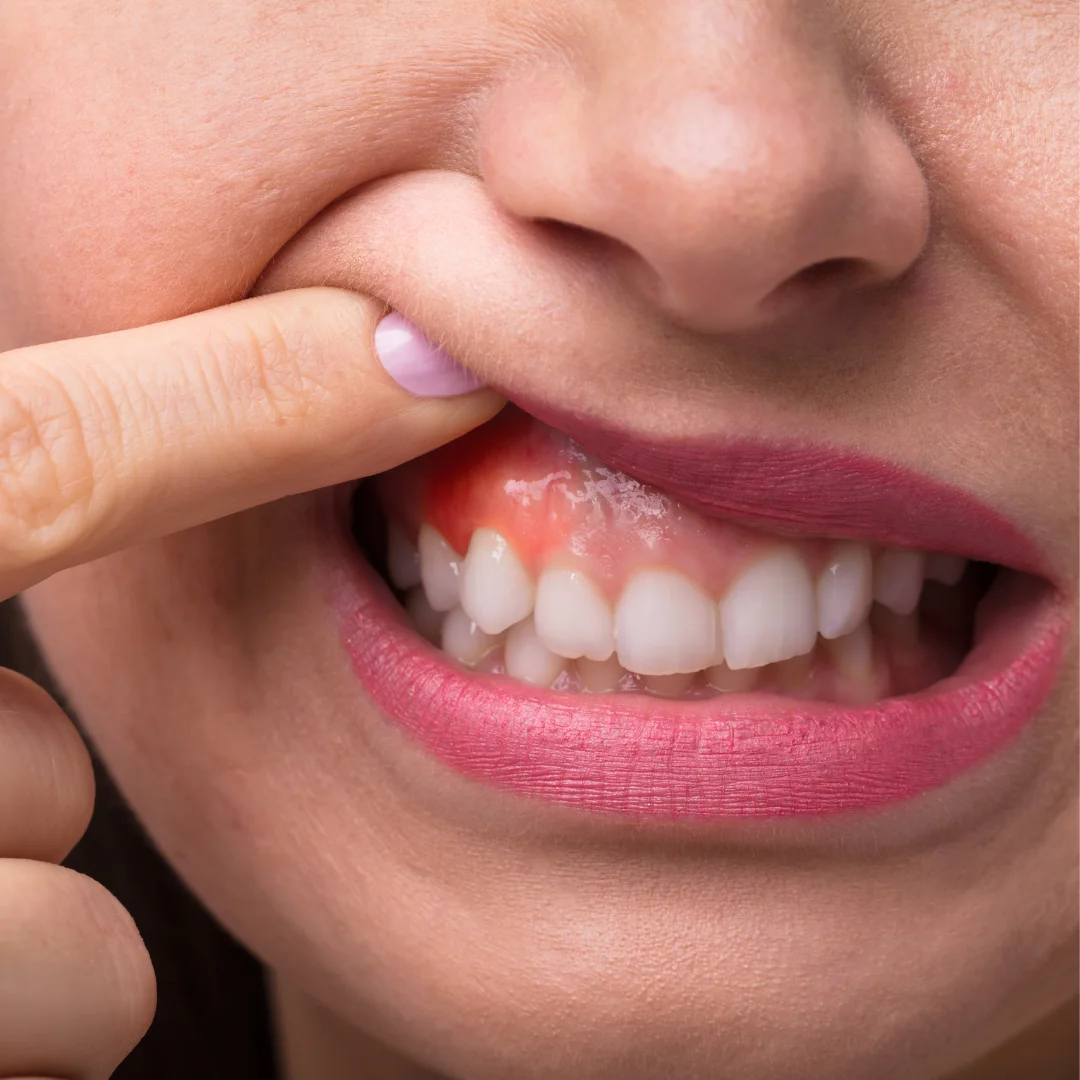
- Gums that look red, puffy, or tender rather than firm and pale pink.
- Teeth that look longer, which usually means the gum has receded rather than the tooth having grown.
- Any looseness or shifting in teeth that were previously stable.
If those measurements come back deeper than they should be, the recommendation is scaling and root planing. Our guide to the stages of gum disease explains how the condition progresses and why the stage matters so much for treatment.
What Scaling and Root Planing Involves
The procedure has two halves, and the name describes both.
Scaling is the removal of plaque and hardened tartar from the tooth surface and from the root below the gumline. Root planing is smoothing the root surface afterward. That second step matters more than it sounds. A rough root gives bacteria something to cling to, while a smooth one lets the gum tissue reattach against the tooth and the pocket shrink.
A few practical things to expect:
- It is usually done in sections. Most people have the mouth treated in halves or quadrants across more than one appointment. This keeps each visit a reasonable length and means only part of your mouth is numb at a time.
- Local anesthetic is standard. Because the work goes below the gumline, the area is numbed first. You should not feel pain during the procedure.
- We can help with nerves. If dental visits are difficult for you, we offer nitrous oxide, and our anxious patients page describes the other adjustments we make.
- It takes longer than a routine cleaning. This is careful work, and rushing it defeats the purpose.
Our gum disease treatment page walks through how we approach periodontal care from the first evaluation onward.
What to Expect Afterward
Recovery is usually straightforward, but knowing what is normal saves a lot of worry.
For the first few days, expect some tenderness in the gums and some sensitivity to hot and cold. Both typically settle within about a week. Mild bleeding when you brush during the first day or two is common as the tissue begins to heal. An over-the-counter pain reliever is usually enough, and warm salt water rinses help.
Some people notice their teeth feel slightly more sensitive at the gumline afterward, or that small spaces have opened between teeth. That is not the procedure causing damage. It is swollen tissue settling down and revealing what was already underneath. As the gums firm up and reattach, the fit improves.
Stick with soft foods for a day if you are sore, keep brushing gently, and resume flossing as soon as it is comfortable. The healing depends on keeping the area clean.
What Happens If You Put It Off
This is the part worth being direct about, because the choice is not between treating now and treating later at the same cost.
Gingivitis, the earliest stage, affects the gums only, and it is genuinely reversible. Treat it and the tissue can return to health with nothing lost.
Periodontitis is different. Once inflammation reaches the bone that anchors your teeth, that bone is lost, and bone does not grow back on its own. Treatment at that point aims to halt the process and hold what remains. Everything already lost stays lost. Left long enough, the support keeps eroding until teeth loosen and are eventually lost, and replacing a tooth costs far more in time, money, and comfort than treating the gums around it would have.
There is also a broader picture. Research has explored links between gum inflammation and conditions elsewhere in the body, including cardiovascular disease and diabetes. Our page on gum disease and whole-body health discusses what those associations do and do not establish, without overstating them.
Keeping the Results
Scaling and root planing resets the situation. It does not make you immune to what caused it.
After treatment, most patients move to a periodontal maintenance schedule, with cleanings more frequently than the usual six-month interval, often every three to four months. Pockets that have been deep tend to repopulate with bacteria faster than healthy gums do, so shorter intervals keep ahead of it. We measure again at these visits so we can see whether the pockets are shrinking.
At home, the essentials are unglamorous and effective: brush twice daily for two full minutes, clean between the teeth every day, and do not skip the back molars where buildup collects. Our guide to reversing gum disease at home covers what home care can realistically achieve and where it stops. If you smoke, stopping does more for your gum health than any product you can buy, because smoking both worsens gum disease and masks the bleeding that would otherwise warn you.
For a sense of what a healthy-gums maintenance visit involves, our page on what happens during a dental cleaning covers the routine version.
Cost, Insurance, and Payment
A deep cleaning costs more than a routine cleaning because it takes more time, more skill, and usually more than one appointment. It is billed by section rather than as a single flat procedure, so the total depends on how much of your mouth is affected. We will always give you a written estimate before anything begins.
Most dental insurance treats scaling and root planing as a basic or major service rather than preventive care, which means it is commonly covered in part rather than in full, often with a deductible or waiting period. We accept most major PPO plans including Delta Dental, MetLife, Cigna, Guardian, and Aetna. Our insurance page explains how we verify benefits and what to expect.
Without coverage, our in-house membership plan is $599 per person per year, covering two cleanings, two exams, annual X-rays, and 15% off other treatment. Financing through CareCredit and Sunbit is also available for larger treatment plans.
Not Sure Where You Stand
If your gums bleed when you brush, if a cleaning was recommended and you have been putting it off, or if you simply have not had your gums measured in a few years, that is worth an appointment. A periodontal evaluation is quick, and the numbers give you a clear answer instead of a vague worry.
Catching this early is the single biggest factor in how much treatment you end up needing. Gingivitis is reversible. Bone loss is not.
Call our Lodi office at (209) 369-3617 during our hours of Monday through Thursday, 8 AM to 5 PM, book online through The Dental App, or reach us through our contact page. We care for patients from Lodi, Stockton, Galt, and the surrounding communities, and we will tell you plainly where your gums stand and what, if anything, needs doing.
Frequently Asked Questions
- What is the difference between a deep cleaning and a regular cleaning?
- A regular cleaning treats the visible tooth surfaces and just below the gumline, and is meant for healthy gums. A deep cleaning, or scaling and root planing, removes hardened deposits from the root surfaces below the gumline and smooths those roots so the gum tissue can reattach. It treats existing gum disease rather than preventing it.
- Does a deep cleaning hurt?
- The area is numbed with local anesthetic first, so you should not feel pain during the procedure. Tenderness and sensitivity to hot and cold for a few days afterwards are normal. We also offer nitrous oxide if dental visits make you anxious.
- How many appointments does a deep cleaning take?
- Most people have the mouth treated in halves or quadrants over more than one visit. That keeps each appointment a manageable length and means only part of your mouth is numb at a time.
- Can I skip a deep cleaning and just brush better?
- No. Once plaque hardens into tartar below the gumline, brushing and flossing cannot remove it. Excellent home care is essential after treatment, but it cannot substitute for the treatment itself.
- Is a deep cleaning covered by insurance?
- Most plans treat scaling and root planing as a basic or major service rather than preventive care, so it is commonly covered in part rather than in full, sometimes with a deductible or waiting period. We will verify your benefits and give you a written estimate before starting.